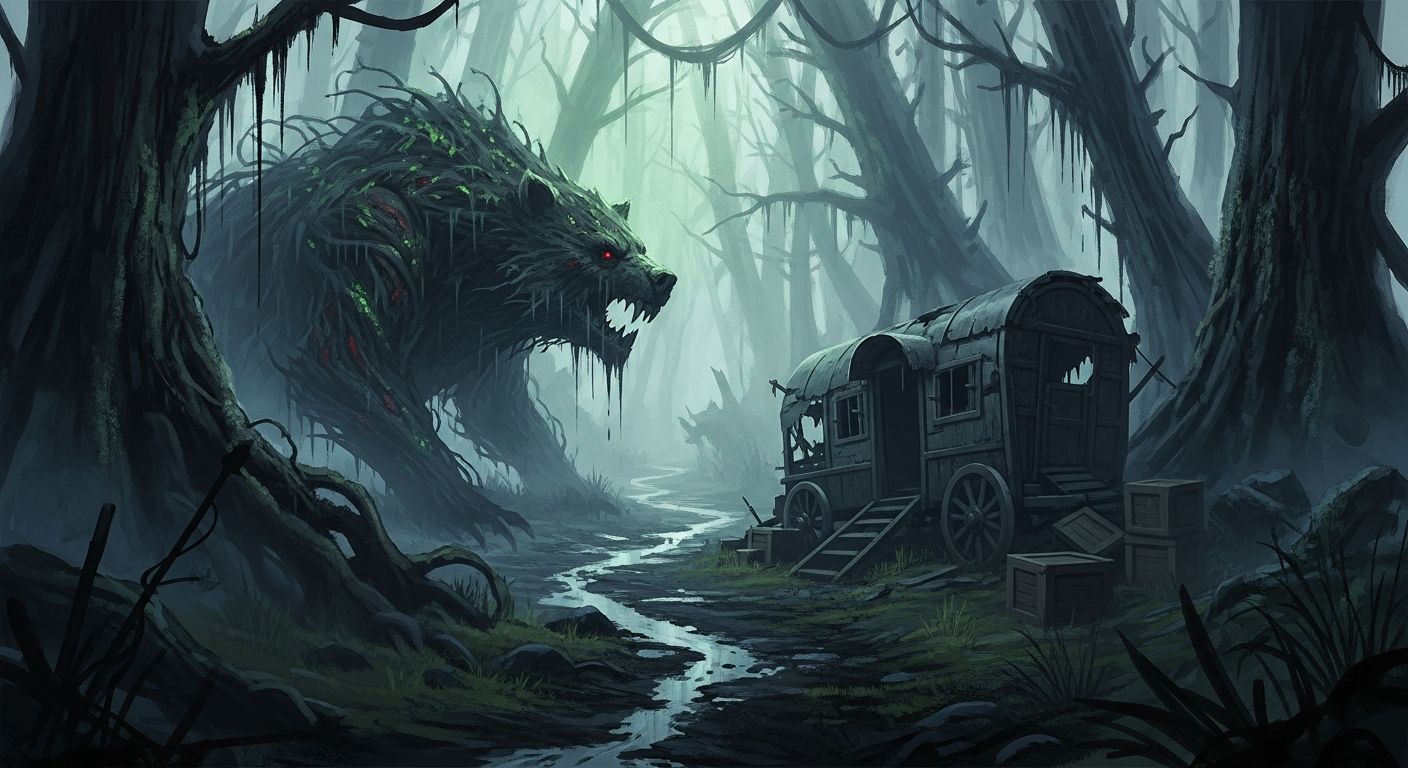
The Bestiary of Ethoria is not a list of myths but a catalog of daily realities. In the thousand years since the Empire rose, the people have learned to live alongside the strange ecology left by the Shattering. While the Rift-Born and Corrupted beasts are dangerous, they are not an apocalyptic siege; they are simply another hazard of life, as predictable as a storm and as manageable as a bandit raid. The Empire has mapped the territories, classified the threats, and established a functioning civilization where trade caravans and travelers move between the regions, albeit with caution and steel.
In the cities, urban pests have evolved. Shadow-Rats are a nuisance to merchants, phasing through walls to steal grain, while Clockwork Ravens—remnants of older eras—often serve as unexpected spies in the high courts. The Watch keeps the streets clear of the more dangerous Face-Thieves, ensuring that commerce and social life continue uninterrupted. The presence of these creatures doesn't stop daily life; it just means that shopkeepers bar their windows with iron and citizens know better than to walk into dark alleys alone.
The wilderness is wild, but it is traversed. Void-Caravans armored against magic ply the trade routes through the Tangled Shatterwilds, their guards trained to repel Vine-Lashers or drive off a wandering Blight-Bear. The Empire's control is firm here; while they cannot eradicate every Wolf-Pack or Rot-Boar, they keep the arteries of the nation open. Apex predators like the Stone-Mauler or the rare Void-Drake are respected dangers of the deep frontiers, hunted by exceptional individuals for glory or resources, rather than existential threats to the common order.
Ultimately, the monsters of Ethoria are a resource as much as a threat. The Delvers harvest Aether-glass from the nests of Crystal-Golems, and alchemists pay high coin for the venom of a Reef-Terror. The world has adapted. The monsters are part of the ecosystem now, and under the Empire's Iron Peace, humanity has proven that it is stubborn enough not just to survive them, but to profit from them.